

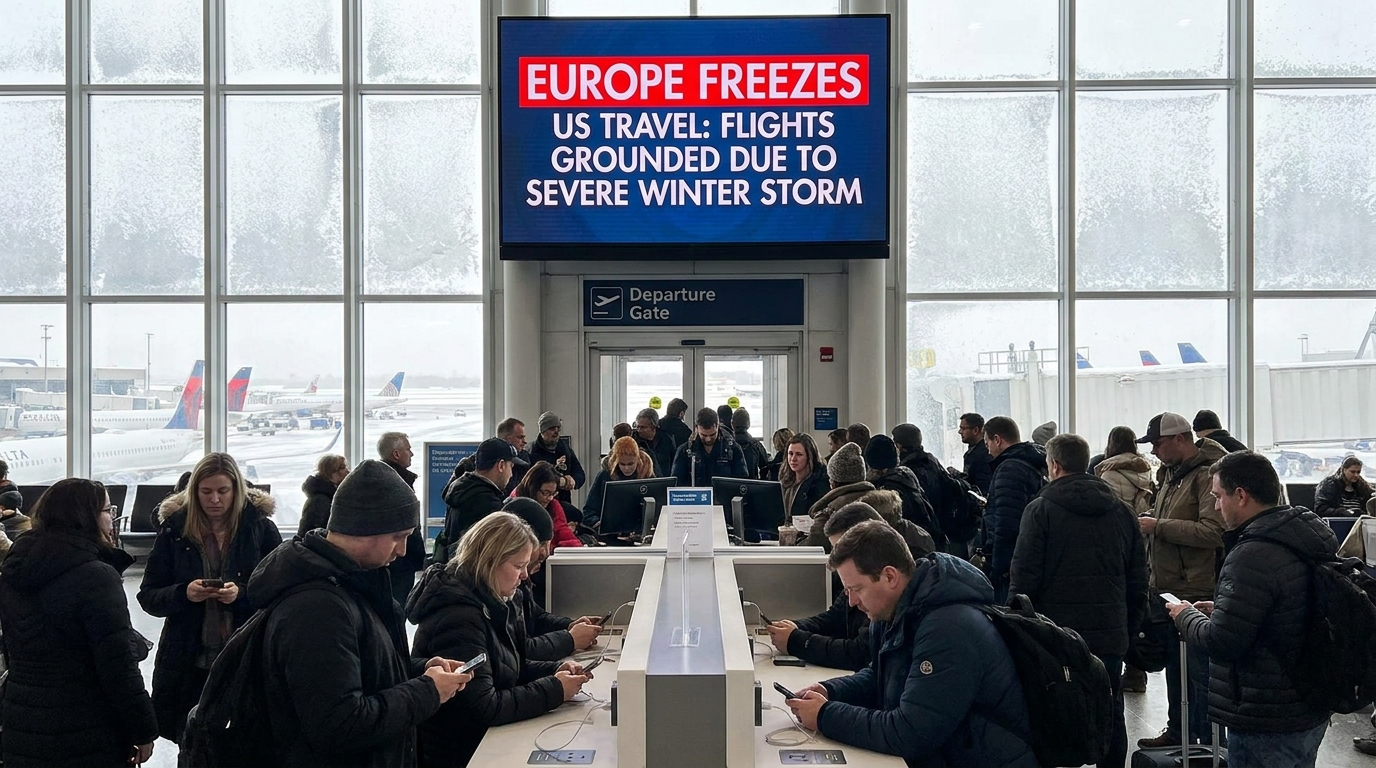
If you have seen headlines saying “Europe freezes US travel,” you might picture border closures or a formal ban. That is not what is happening. There is no official freeze, and no European government has stopped its citizens from flying to the United States. What the phrase actually points to is a real and measurable drop in European visitors coming to the US in 2026, caused by a mix of cost, currency swings, and cooling sentiment toward the country. Meanwhile, Americans are still free to travel to Europe, though a new entry system is about to change how that process works.
This guide breaks down what is really going on, why fewer Europeans are booking flights to the US, how it is affecting airlines and travelers, and what both American and European travelers need to know before their next trip.
Quick Facts
| Topic | Details |
|---|---|
| Is there an official travel ban? | No. No European country has banned travel to the US |
| What’s actually happening | A measurable decline in European arrivals to the US in 2026 |
| Main causes | Higher costs, a strong dollar, political sentiment, safety concerns |
| Scale of the decline | Roughly 7-12% drop in arrivals from major European markets in 2026 (estimated, varies by month and country) |
| Are Americans affected traveling to Europe? | No formal restrictions; the 90-day visa-free Schengen rule still applies |
| New system to know about | ETIAS, a pre-travel authorization for US citizens visiting Europe, expected to roll out in late 2026 |
| Last updated | 2026 |
What “Europe Freezes US Travel” Actually Means
The word “freeze” makes this sound like a government decision, but it is not. There is no law, order, or joint EU policy stopping people from flying between Europe and the United States. Flights are still running. Airports are still open. What has changed is demand.
Fewer Europeans are choosing to book trips to the United States this year. Airlines have responded by trimming some transatlantic routes and cutting fares on flights to cities like Atlanta, Washington D.C., Los Angeles, and Boston to fill seats that would otherwise sit empty. That combination, softer bookings plus airlines adjusting their schedules, is what news outlets have shorthanded as a “freeze.” It is a slowdown in demand, not a shutdown of travel.
Why European Travel to the US Is Actually Declining
Several factors are feeding this trend at once, and most of them are financial and reputational rather than legal.
Cost and currency pressure. A strong US dollar has made American trips more expensive for European travelers, stretching already tight vacation budgets further than in past years.
Political sentiment. Public opinion surveys have shown unfavorable views of the United States rising sharply in several Western European countries over the past year, which appears to be shaping some travel decisions, even if cost remains the bigger driver overall.
Safety and entry concerns. Stricter border enforcement, longer visa interview wait times, and reports of travelers being denied entry despite having valid documentation have added a layer of hesitation for some visitors, even those from visa-exempt countries.
Broader shift toward shorter, closer trips. Industry research from the European Travel Commission and Eurail found that long-haul travel intentions are down across nearly all major markets in 2026, not just toward the US specifically. Travelers everywhere are leaning toward shorter, closer, and more budget-friendly trips this year.
The numbers back this up. US government tourism data has shown monthly declines in overseas arrivals through much of 2026, with Western Europe consistently among the hardest-hit regions, and combined arrivals from Germany, France, Italy, Spain, and the Netherlands running well behind their 2025 pace for the January-through-July period. Advance booking data from aviation analytics firms has also pointed to double-digit year-over-year drops for the July 2026 travel window, which overlapped with the FIFA World Cup, an event many expected would boost inbound travel rather than coincide with a slowdown.
Recent 2026 Developments Worth Knowing
A few updates from this year are directly shaping how this story is playing out:
- The 2026 FIFA World Cup effect fell short of expectations. Despite hopes that hosting matches across North America would offset the slump, overseas arrivals to the US kept falling through the tournament window rather than rebounding.
- Canada has shown some recovery, with Canadian resident return trips from the US rising in May 2026, offering a partial counterbalance even as long-haul European demand stayed weak.
- Airlines are actively adjusting capacity. Several major carriers have cut fares or reduced frequencies on select US-bound routes from Europe in response to softer bookings, rather than pulling out of markets entirely.
If you are watching this space, the next few months of arrival data will show whether the slowdown is temporary or becomes a longer trend.
What This Means If You’re Traveling
If you’re American and planning a trip to Europe: Nothing has changed for you yet. The 90-day visa-free stay within the Schengen Area is still in place. The one update to prepare for is ETIAS (European Travel Information and Authorisation System), a short online pre-travel screening similar to the US ESTA. It is not a visa and will not shorten your allowed stay. It is expected to launch in the final quarter of 2026, with a grace period before enforcement tightens in 2027. Applying early once it opens is the simplest way to avoid delays.
If you’re European and considering a US trip: There is no ban stopping you, but expect higher costs tied to the strong dollar, and budget extra time for entry procedures at busier airports. It is also worth checking your home country’s current travel advisories, since some governments have updated guidance on US entry experiences this year.
If you’re comparing destinations because of cost: The softer demand from Europe to the US has actually pushed some airlines to lower fares on affected routes, which can work in a traveler’s favor if the destination still appeals to you.
FAQ
Did Europe actually ban travel to the United States in 2026?
No. No European country or EU-wide body has banned travel to the US. The “freeze” refers to a drop in European visitor numbers, not a legal restriction.
Why are fewer Europeans traveling to the US right now?
A mix of a strong dollar raising costs, cooling political sentiment, stricter entry procedures, and a broader global shift toward shorter, closer trips are all contributing.
Can Americans still travel to Europe without a visa?
Yes. The 90-day visa-free stay within the Schengen Area is unchanged. The upcoming ETIAS system adds a quick online authorization step but does not require a visa or reduce the allowed stay.
What is ETIAS and when does it start?
ETIAS is a pre-travel authorization for visa-exempt travelers visiting the Schengen Area, similar to the US ESTA. It is expected to launch in the last quarter of 2026, with enforcement ramping up in 2027.
Will this slowdown affect flight prices?
It already has on some routes. Airlines have cut fares on select US-bound flights from Europe to fill seats amid softer demand, though prices generally still move with normal seasonal and capacity factors.
How This Was Researched
I researched this topic using recent tourism industry reporting, government arrival statistics from US tourism offices, and coverage from established travel and business news outlets. Where figures varied between sources, I noted the range rather than picking a single number to present as definitive. Several existing articles on this topic either overstate the situation as an actual ban or skip the underlying arrival data entirely; this piece tries to close that gap by grounding the explanation in verified figures and clearly separating confirmed facts from ongoing trends.
Accuracy Note
This article is based on publicly available tourism data, government statistics, and reporting from travel industry and news outlets current as of 2026. Some figures, such as month-to-month percentage changes, may shift as more complete data is released. If you spot anything outdated or incorrect, please let us know so we can update it.
Written and researched by Abdul Wahab, contributor at NoblePen Magazine.

